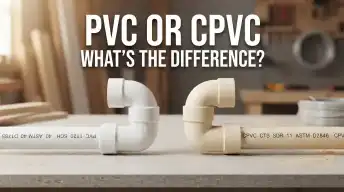
PVC piping commonly serves drainage, irrigation, and certain cold-water applications.Although the two materials look similar, they are not suitable for every application interchangeably.
People often search for “PVC or CPVC” to compare their performance, costs, and suitability for different plumbing projects. Choosing the wrong material can lead to compatibility problems, leaks, or premature pipe failure.
Manufacturers chemically modify CPVC to help it withstand higher temperatures than standard PVC. PVC, on the other hand, remains a practical choice for many applications that do not require the same level of heat resistance.
This guide explains the meanings of PVC and CPVC, compares their differences and uses, and highlights the factors you should consider when choosing between them. Understanding these differences will help you make a more informed decision for plumbing, construction, irrigation, or other piping projects.
PVC vs CPVC: Key Differences and Uses
PVC and CPVC are common materials for plumbing and construction, with each designed for different applications.Manufacturers commonly use PVC (polyvinyl chloride) to make drainage pipes, irrigation systems, and pipes for suitable cold-water applications.
CPVC (chlorinated polyvinyl chloride) can withstand higher temperatures, making it a common choice for approved hot, and cold,water plumbing. The right material depends on the intended application, operating conditions, and local plumbing regulations. The best choice depends on the pipe’s intended use, temperature and pressure ratings, and local plumbing requirements.
PVC or CPVC: Quick Answer
Plumbers generally choose PVC for drainage, irrigation, and certain cold-water systems, while they use approved CPVC piping for hot- and cold-water plumbing because it tolerates higher temperatures.
Here is a simple comparison:
- PVC: Often suitable for drainage, irrigation, and approved cold,water applications.
- CPVC: Often suitable for approved hot, and cold,water supply systems.
- Cost: PVC is often less expensive, although prices vary by product and location.
- Heat resistance: CPVC generally offers greater heat resistance than standard PVC products designed for comparable applications.
For example, PVC may be suitable for a garden irrigation line, while CPVC may be a better choice for a hot,water supply line. Always check the product’s temperature and pressure ratings before installation.
What Does PVC Mean?
PVC stands for polyvinyl chloride, a widely used plastic material found in plumbing pipes, fittings, electrical conduits, and various construction products.
PVC is popular because it is lightweight, corrosion,resistant, and often economical. Unlike metal pipes, it does not rust. Its smooth interior can also support efficient water flow when the piping system is correctly designed and installed.
Common Uses of PVC
PVC pipes and products are used in several applications, including:
- Drainage and wastewater systems
- Garden and agricultural irrigation
- Vent piping
- Certain approved cold,water systems
- Electrical conduit and protective tubing
- Selected industrial fluid,handling applications
One reason PVC is widely used is its versatility. Different PVC products are manufactured for different purposes, so the correct type must be selected for each project.
Advantages of PVC
PVC offers several practical benefits:
- Corrosion resistance: It does not rust like iron or steel.
- Lightweight construction: It is generally easy to handle and transport.
- Cost,effectiveness: Many PVC products are economical compared with alternative piping materials.
- Wide availability: PVC pipes and fittings are commonly available in many sizes.
- Versatility: Suitable products serve drainage, irrigation, conduit, and other applications.
Limitations of PVC
PVC also has limitations. Standard PVC pressure piping is generally not intended for conventional residential hot,water supply. Higher temperatures can reduce its pressure capacity and affect its performance.
Its suitability also depends on the product’s pressure rating, chemical compatibility, installation conditions, and applicable regulations. Therefore, you should never assume that every PVC pipe can be used for every water or fluid system.
What Does CPVC Mean?
CPVC stands for chlorinated polyvinyl chloride. It is made by chemically modifying PVC through a process called chlorination. This process improves its ability to withstand higher temperatures.
Because of this property, CPVC is commonly used in approved hot, and cold,water plumbing systems. It can also be used in selected commercial and industrial applications when the specific product meets the required standards.
Common Uses of CPVC
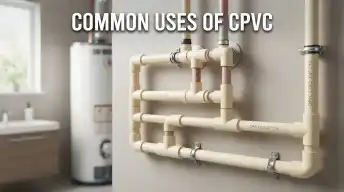
CPVC products are commonly used for:
- Hot,water supply lines
- Cold,water plumbing
- Residential plumbing systems
- Commercial building plumbing
- Selected industrial fluid systems
- Certain approved fire,sprinkler systems
The exact application depends on the pipe’s design, certification, temperature and pressure limits, and local regulations.
Advantages of CPVC
CPVC provides several useful benefits:
- Greater heat resistance: It is suitable for many applications involving warmer water.
- Corrosion resistance: It does not rust like conventional metal piping.
- Lightweight design: It is generally easier to handle than many metal alternatives.
- Plumbing versatility: Approved products can be used in hot, and cold,water systems.
- Low maintenance needs: When correctly selected and installed, CPVC can provide dependable service.
Limitations of CPVC

CPVC often costs more than standard PVC, although actual prices vary. It also requires compatible fittings and joining materials.
Like other piping materials, CPVC has defined temperature, pressure, and chemical,resistance limits. Its performance can also depend on sunlight exposure, installation quality, and the conditions in which it operates.
Always follow the manufacturer’s installation instructions and check local plumbing requirements before using CPVC.
The Origin of PVC and CPVC
Researchers first identified PVC in the 1800s, and manufacturers later refined it for commercial use as a versatile plastic. During the twentieth century, manufacturers expanded its use in construction, plumbing, electrical conduit, and industrial products.
As demand grew for materials that could withstand different operating conditions, researchers developed modified forms of PVC. CPVC emerged through a chemical process that adds chlorine to PVC, improving its heat resistance.
Manufacturers developed CPVC to handle applications that standard PVC cannot reliably withstand, including certain hot-water plumbing systems.
Although CPVC offers greater heat resistance, it is not automatically the best option for every project. PVC remains useful for many applications where its performance characteristics meet the requirements.
British English vs American English: PVC or CPVC
People use PVC and CPVC as technical abbreviations in both British and American English. Their spelling and full forms do not change between these varieties of English.
However, product standards, plumbing regulations, and approved uses may differ by country. A pipe suitable for a particular application in one location may require different certification or approval elsewhere.
| Feature | PVC | CPVC |
| Full form | Polyvinyl chloride | Chlorinated polyvinyl chloride |
| Spelling difference | None | None |
| Heat resistance | Generally lower | Generally higher |
| Common uses | Drainage, irrigation, selected cold,water applications | Approved hot, and cold,water plumbing |
| Corrosion resistance | Yes, for compatible applications | Yes, for compatible applications |
| Relative cost | Often less expensive | Often more expensive |
| Selection factors | Intended use, pressure rating, and local codes | Intended use, temperature rating, and local codes |
Remember: The most important difference is not British versus American spelling. It is how each material performs under the conditions for which it is designed.
Which Is Better: PVC or CPVC?
PVC and CPVC both have useful properties, but neither material is better for every project. The right choice depends on the purpose of the piping system, the temperature of the fluid, the operating pressure, and local plumbing requirements.
PVC is often a practical option for drainage, irrigation, and certain cold,water applications. CPVC is commonly selected for approved hot, and cold,water plumbing because it offers greater heat resistance.
When Should You Choose PVC?
PVC is a good option when the application does not require the higher heat resistance associated with CPVC and the selected product meets all operating requirements.
Consider PVC for:
- Drainage and wastewater systems.
- Garden and agricultural irrigation.
- Approved cold,water applications.
- Vent piping and suitable construction projects.
- Systems that operate within the pipe’s specified temperature and pressure limits.
For example, a homeowner installing a garden irrigation system may choose suitable PVC piping because it is lightweight, corrosion,resistant, and often economical.
However, the exact PVC product must be appropriate for the intended use. Drainage pipe and pressure,rated pipe, for instance, are not automatically interchangeable.
When Should You Choose CPVC?
CPVC is often a suitable choice when the piping system requires greater heat resistance and the product is approved for the intended application.
Consider CPVC for:
- Approved hot,water supply lines.
- Residential hot, and cold,water plumbing.
- Commercial plumbing systems.
- Selected industrial fluid,handling applications.
- Other installations specifically permitted by the manufacturer and local regulations.
For example, CPVC may be appropriate for a home’s hot,water supply when the complete system meets the required temperature and pressure ratings.
Before installation, make sure the fittings, joining materials, and other components are compatible with the selected CPVC system.
Can You Use PVC Instead of CPVC?
You should not substitute standard PVC for CPVC in a hot,water system unless the specific PVC product is explicitly rated and approved for that application.
Although both materials are plastic and may look similar, their heat,resistance properties differ. Using an unsuitable pipe can lead to leaks, damage, or premature failure.
Similarly, CPVC should not automatically replace PVC in every project. Check the product’s approved applications, ratings, and installation requirements before making a substitution.
PVC vs CPVC: Temperature and Pressure
Temperature and pressure are two of the most important factors when choosing between PVC and CPVC. A pipe’s ability to withstand pressure can change as its operating temperature increases.
Temperature Resistance
PVC is widely used in applications that remain within its specified temperature limits. Standard PVC pressure piping is generally not intended for conventional residential hot,water supply.
CPVC offers greater heat resistance, which makes many approved CPVC products suitable for hot,water plumbing. However, CPVC also has operating limits, so you should never assume it can handle every temperature.
Pressure Ratings
Both PVC and CPVC pipes are manufactured in different sizes and ratings. The allowable operating pressure depends on the specific product and its conditions of use.
Before choosing a pipe, check:
- The maximum operating temperature.
- The required system pressure.
- The manufacturer’s pressure rating at the intended temperature.
- The suitability of fittings and connections.
- The applicable plumbing codes and product approvals.
Important: Never select a pipe based only on if it is labelled PVC or CPVC. The exact product specifications determine if it is suitable for the system.
Is PVC Cheaper Than CPVC?
PVC is often less expensive than CPVC, but prices vary by manufacturer, pipe size, product rating, location, and availability.
The total cost of a piping project also includes fittings, joining materials, labor, and installation requirements. A cheaper pipe may not be the economical choice if it cannot handle the intended conditions.
Factors That Affect the Cost
Pipe size: Larger pipes generally require more material and may cost more.
Pressure rating: Different ratings can affect the price of the same general pipe type.
Fittings and accessories: Elbows, connectors, valves, and joining products contribute to the total expense.
Installation labor: Project design and installation requirements can affect labor costs.
Intended application: Using a pipe that is not approved for the system can result in expensive repairs or replacement.
For example, PVC may be an economical option for a suitable irrigation project. For an approved hot,water system, CPVC may be the more appropriate choice even if its initial cost is higher.
The best approach is to compare complete systems that meet the same requirements rather than comparing only the price per length of pipe.
Common Mistakes When Comparing PVC and CPVC
People sometimes assume that PVC and CPVC are interchangeable because their names are similar. This can cause confusion when selecting materials for plumbing and construction.
1. Assuming Both Materials Are the Same
PVC and CPVC are related materials, but they have different performance characteristics. CPVC undergoes additional chemical treatment to improve heat resistance.
How to avoid this mistake: Check the product label and technical specifications before purchasing or installing either type.
2. Using Standard PVC for Hot Water
Standard PVC pressure piping is generally unsuitable for conventional residential hot,water supply.
How to avoid this mistake: Choose a product specifically approved for the operating temperature and intended application.
3. Believing CPVC Is Always Better
CPVC’s greater heat resistance does not make it the best choice for every project. Suitable PVC may be perfectly adequate for drainage, irrigation, and other approved applications.
How to avoid this mistake: Start with the system’s requirements instead of choosing a material based on a general claim that one is better.
4. Ignoring Pressure Ratings
Two pipes made from the same material can have different pressure ratings. Operating temperature can also affect the pressure a pipe can safely handle.
How to avoid this mistake: Review the product’s pressure rating at the intended operating temperature and follow the manufacturer’s guidance.
5. Using Incompatible Joining Materials
PVC and CPVC may require different compatible cements, primers, fittings, and joining procedures. An unsuitable product can compromise a connection.
How to avoid this mistake: Use the joining materials and installation methods specified for the exact piping system.
6. Overlooking Local Plumbing Codes
Not every pipe is approved for every location or application. Requirements can differ for drinking water, hot,water supply, underground installation, and fire,protection systems.
How to avoid this mistake: Check local regulations and confirm that the pipe carries the necessary approvals for its intended use.
Everyday Examples of PVC and CPVC
Understanding how people refer to PVC and CPVC in everyday situations makes the difference easier to remember.
Example 1: Garden Irrigation
“The plumber recommended PVC for the garden irrigation line.”
This may be appropriate when the selected pipe meets the system’s pressure and installation requirements.
Example 2: Hot,Water Plumbing
“We need a pipe that is approved for the home’s hot,water supply.”
CPVC is commonly considered for this application because of its greater heat resistance.
Example 3: Comparing Prices
“PVC may cost less, but we should compare the complete installation cost.”
This example shows why pipe prices alone do not determine the best choice.
Example 4: Repairing a Pipe
“Check the existing pipe material before buying replacement fittings.”
Identifying the material helps prevent compatibility problems and unsuitable repairs.
Example 5: Discussing a Building Project
“PVC is commonly used for drainage, while CPVC is often used for approved hot,water plumbing.”
This is a useful general distinction, although the correct application always depends on the exact product and local requirements.
PVC or CPVC: Modern Usage and Industry Applications
PVC and CPVC are widely used in plumbing, construction, agriculture, and selected industrial systems. Although both materials are made from related plastics, their different properties make them suitable for different applications.
PVC is commonly associated with drainage systems, irrigation, electrical conduits, and certain cold,water applications. Its lightweight construction and corrosion resistance make it a practical option for many projects.
CPVC is frequently used in approved hot, and cold,water plumbing systems because it offers greater heat resistance than standard PVC products designed for comparable applications. Certain CPVC products are also used in commercial and industrial environments where their specifications meet the operating requirements.
When selecting either material, consider the intended use, operating temperature, pressure rating, chemical compatibility, and installation conditions. Product approvals and local building codes are particularly important for drinking,water systems and fire,protection installations.
Modern piping systems depend on choosing the right material for the job. Neither PVC nor CPVC should be selected based on price or appearance alone.
PVC vs CPVC: Quick Comparison Table
| Feature | PVC | CPVC |
| Full form | Polyvinyl chloride | Chlorinated polyvinyl chloride |
| Material | Standard polyvinyl chloride | Chlorinated form of PVC |
| Heat resistance | Generally lower | Generally higher |
| Common applications | Drainage, irrigation, conduit, selected cold,water uses | Approved hot, and cold,water plumbing |
| Corrosion resistance | Yes, for compatible applications | Yes, for compatible applications |
| Relative cost | Often less expensive | Often more expensive |
| Hot,water suitability | Standard pressure pipe is generally unsuitable for conventional hot,water supply | Commonly suitable when specifically approved |
| Installation | Requires application,appropriate fittings and joining methods | Requires compatible fittings and joining methods |
| Main advantage | Versatility and often lower cost | Greater heat resistance |
| Main limitation | Temperature restrictions for many products | Often higher cost and specific installation requirements |
The table provides a general comparison. Always use the technical information for the exact pipe and fitting products being considered.
Key Takeaways: PVC or CPVC
Here are the most important points to remember when comparing PVC and CPVC:
- PVC means polyvinyl chloride. It is commonly used for drainage, irrigation, conduit, and selected cold,water applications.
- CPVC means chlorinated polyvinyl chloride. The additional chlorination improves its heat resistance.
- CPVC generally handles higher temperatures than standard PVC products designed for comparable applications.
- PVC is often less expensive, although prices depend on product specifications and location.
- CPVC is commonly used for approved hot,water plumbing, subject to its operating limits.
- The materials are not automatically interchangeable. Their fittings and joining methods must be compatible.
- Product ratings matter. Temperature, pressure, chemical compatibility, and intended use all affect the decision.
- Local codes must be followed. Confirm that the selected product is approved for the specific installation.
The easiest way to remember the difference is that PVC is commonly associated with drainage and irrigation, while CPVC is often chosen when greater heat resistance is required.
Frequently Asked Questions
Q1: What is the main difference between PVC and CPVC?
The main difference is heat resistance. PVC stands for polyvinyl chloride and is commonly used for drainage, irrigation, and certain cold,water applications. CPVC stands for chlorinated polyvinyl chloride and undergoes additional chemical treatment to improve its resistance to higher temperatures. This makes approved CPVC products suitable for many hot,water plumbing systems. The correct choice depends on the pipe’s ratings and intended use.
Q2: Is CPVC better than PVC?
CPVC is generally better suited to applications that require greater heat resistance, such as many approved hot,water plumbing systems. However, it is not automatically the best choice for every project. PVC may be more practical and economical for suitable drainage or irrigation systems. The better material is the one that meets the project’s temperature, pressure, compatibility, and regulatory requirements.
Q3: Can PVC be used for hot water?
Standard PVC pressure piping is generally not designed for conventional residential hot,water supply. Higher temperatures can reduce its pressure capacity and affect its performance. Before using any pipe for hot water, check the manufacturer’s specifications and confirm that the exact product is approved for the intended temperature and application. Never assume a pipe is suitable simply because it can carry water.
Q4: Why is CPVC used for hot,water pipes?
CPVC is made by chlorinating PVC, which improves its ability to withstand higher temperatures. This property makes many approved CPVC products suitable for hot,water supply systems. However, CPVC still has temperature and pressure limits. The pipe, fittings, and joining materials must be compatible, and the complete installation must comply with the manufacturer’s instructions and local plumbing regulations.
Q5: Is PVC cheaper than CPVC?
PVC is often cheaper than CPVC, but the price difference depends on pipe size, manufacturer, pressure rating, availability, and location. You should also consider fittings, joining materials, and installation costs. Choosing a cheaper pipe that is unsuitable for the application can lead to leaks or replacement expenses. Compare complete systems that meet the same requirements before making a decision.
Q6: Can PVC and CPVC fittings be used together?
You should not assume PVC and CPVC fittings are interchangeable. Compatibility depends on the particular products, joining method, and application. Using the wrong fitting or joining material can weaken a connection and cause leaks. Always follow the manufacturer’s instructions, select compatible components, and confirm that the complete piping system is approved for its intended use.
Q7: Which pipe is suitable for drinking water?
The suitable pipe depends on local regulations and if the exact product is approved for potable water. Some PVC and CPVC products are manufactured for approved water,supply applications, but not every pipe is safe or certified for drinking water. Check the product markings, relevant certifications, and local plumbing requirements before selecting a pipe for a drinking,water system.
Q8: Does CPVC last longer than PVC?
Neither material automatically lasts longer in every situation. Service life depends on operating temperature, pressure, chemical exposure, sunlight, installation quality, and maintenance. CPVC’s greater heat resistance may make it more appropriate for certain hot,water applications, while properly selected PVC can perform well in its intended environment. Following product specifications and installing the system correctly helps both materials provide reliable service.
Q9: Can PVC and CPVC be used outdoors?
Both materials may be suitable for certain outdoor applications, but their suitability depends on the product and exposure conditions. Sunlight, temperature changes, physical damage, and installation methods can affect performance. Some products may require protection from direct sunlight or other environmental conditions. Check the manufacturer’s instructions and confirm that the pipe is approved for the planned outdoor installation.
Q10: How do I choose between PVC and CPVC?
First, identify the purpose of the piping system and determine its operating temperature and pressure. Then, check the product’s ratings, approvals, fitting compatibility, and installation requirements. Review the relevant local plumbing codes before purchasing the materials. For drainage or irrigation, suitable PVC may be a practical option. For hot,water plumbing, an approved CPVC system is often more appropriate.
Conclusion
PVC and CPVC are useful piping materials, but they are designed to meet different needs. PVC is commonly used for drainage, irrigation, conduit, and certain cold,water applications because it is lightweight, corrosion,resistant, and often economical. CPVC offers greater heat resistance, making approved products suitable for many hot, and cold,water plumbing systems.
The right choice depends on more than price or appearance. You should consider the intended application, operating temperature, pressure rating, installation method, and local plumbing regulations. It is also important to use compatible fittings and joining materials to help prevent leaks and connection problems.
If you are planning a drainage or irrigation project, suitable PVC may be a practical choice. If you need piping for a hot,water supply, an approved CPVC system may be more appropriate. Neither material is ideal for every situation, so check the manufacturer’s specifications before installation.
In short, PVC is commonly used for drainage and irrigation, while CPVC is often preferred when greater heat resistance is needed. Choosing the right product for the intended conditions will help you build a safer and more reliable piping system.
Read More About !

“I’m Charlotte Vans, and I enjoy making grammar and word usage easier to understand. Through my writing, I help readers understand confusing words, improve spelling, and write with greater confidence.”








1 thought on “PVC or CPVC: Differences, Uses, and Which Is Better?”