Crisis or Crises: Simple Rules, Examples, and Common Mistakes

Crisis is the singular form, while crises is the plural form. Use crisis for one serious problem or difficult situation, ...
Read more
When or Went: Which Is Correct?

“When” and “went” are both correct English words, but they have completely different meanings and grammatical roles. When is mainly ...
Read more
Continuously or Continually: What’s the Difference?
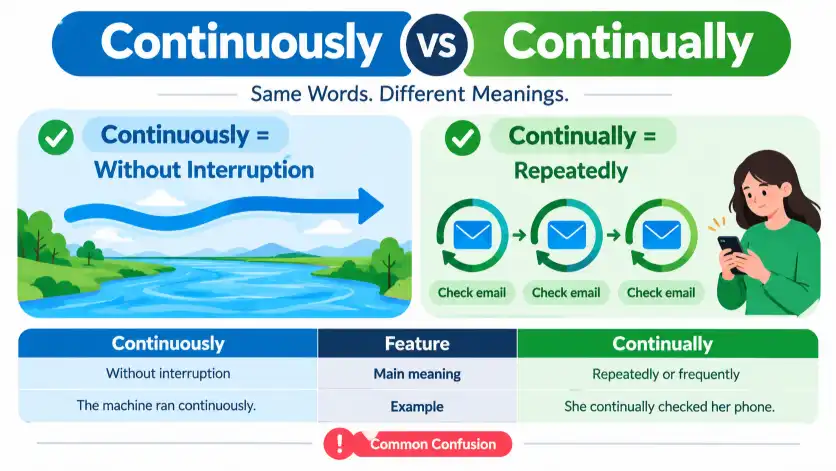
Have you ever wondered if something happens continuously or continually? Both words describe something that happens repeatedly over time, so ...
Read more
Nill or Nil: Which Spelling Is Correct?
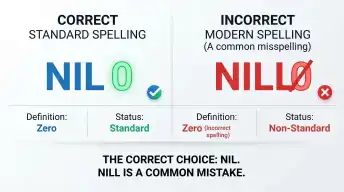
Nil is the correct and standard spelling when you mean zero, nothing, or no amount. Nill is not normally used ...
Read more
Rabit or Rabbit: Which Spelling Is Correct?

Rabbit is the correct spelling, while rabit is a common misspelling. If you are writing about the small animal with ...
Read more
Aw or Awe: What’s the Difference?

Aw and awe are both correct English words, but they have different meanings and uses. This simple distinction can be ...
Read more
Feint or Faint: What’s the Difference?

Feint and faint may sound alike, but they have different meanings. Feint means a deceptive move or action, while faint ...
Read more
Recognising or Recognizing: Which Spelling Is Correct?
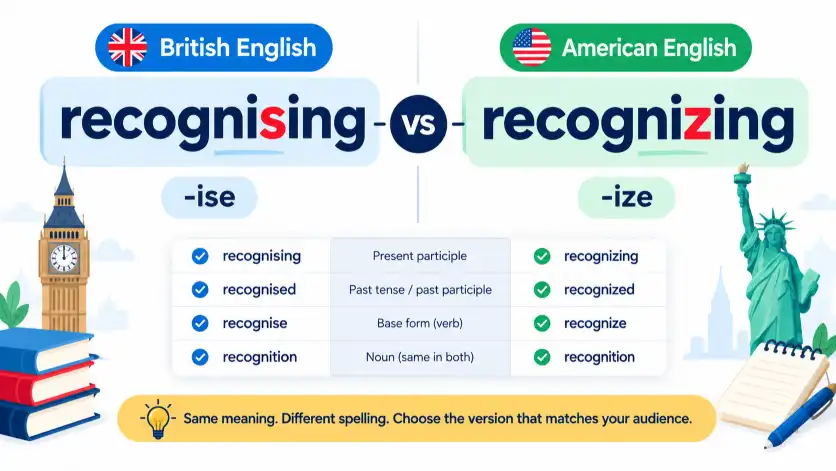
Recognising is the common British English spelling, while recognizing is the standard American English spelling, and both mean identifying, understanding, ...
Read more
Run or Ran: What’s the Difference?

If you are unsure if to use run or ran, remember this simple rule: run is the base or present ...
Read more
Questioner or Questionnaire: Meaning, Usage, and Examples

Questioner means a person who asks questions, while questionnaire means a written or digital set of questions used to collect ...
Read more